


Hallelujah People
- Apr 5, 2024
- 11 min read
A Crash Course in Life and in Love
"Sharing is caring." This age-old adage is taught to preschoolers who refuse to give up their Barbies so the other kids could play too is a lesson made new for me over my spring break. I was given the life-changing opportunity to go on an immersion trip to Tijuana with a group of other USD students who would cross the border to serve migrants, orphans, and at-risk populations across the city and stay at Parroquia María Immaculada. I was intrigued by the announcements the leaders would make at the end of mass celebrations every Sunday, so I decided to sign up. I attended weekly formation meetings where I was informed about some of the logistics of the trip, but more than anything, I was just curious. Turning twenty brought on a whole existential crisis for me, so in order to make peace with the mostly overwhelming passage of time, I set a number of goals for myself. Top of the list? "Get out into the world." Perfect, I thought to myself, that's just what I'll do.
I had no idea what I had gotten myself into. I am someone who prides myself on being prepared for anything, but no amount of reflection could have prepared me for this experience. As soon as we crossed the border, I could not shake the feeling that I was out of my element. I haven't spoken Spanish in over six years, I didn't have any pesos, and all of the sudden, there were no more paved roads. We crossed over a speed bump, and just like that, I was in Mexico. Everything was so colorful and loud, it seemed as though the city itself was brimming with life. Stray dogs zipped across the roads while street vendors shouted about beads. The national guard rode around in truck beds and carried rifles that stood taller than me, and I was reminded of the conversations we shared with San Diego Border Patrol the day before. All I had known about Tijuana was the news headlines and the conversations we had with these agents, so I was unsure of what to expect. We drove out of the city and into the outskirts of Tijuana just as the sun was setting. The skies were illuminated with these hues of deep pink and purple as our van bobbed up the hill. We arrived at the parish we would be staying at well after dark, but it may as well have been lunchtime with the amount of people running around. Children chasing each other on scooters, the smell of spices coming from the kitchen, and a very enthusiastic Manuel who was excited to welcome us for our stay. Parishioners had gone up to our room and made our beds, and while everyone slept soundly after a long day of travel, I was having difficulty processing it all.
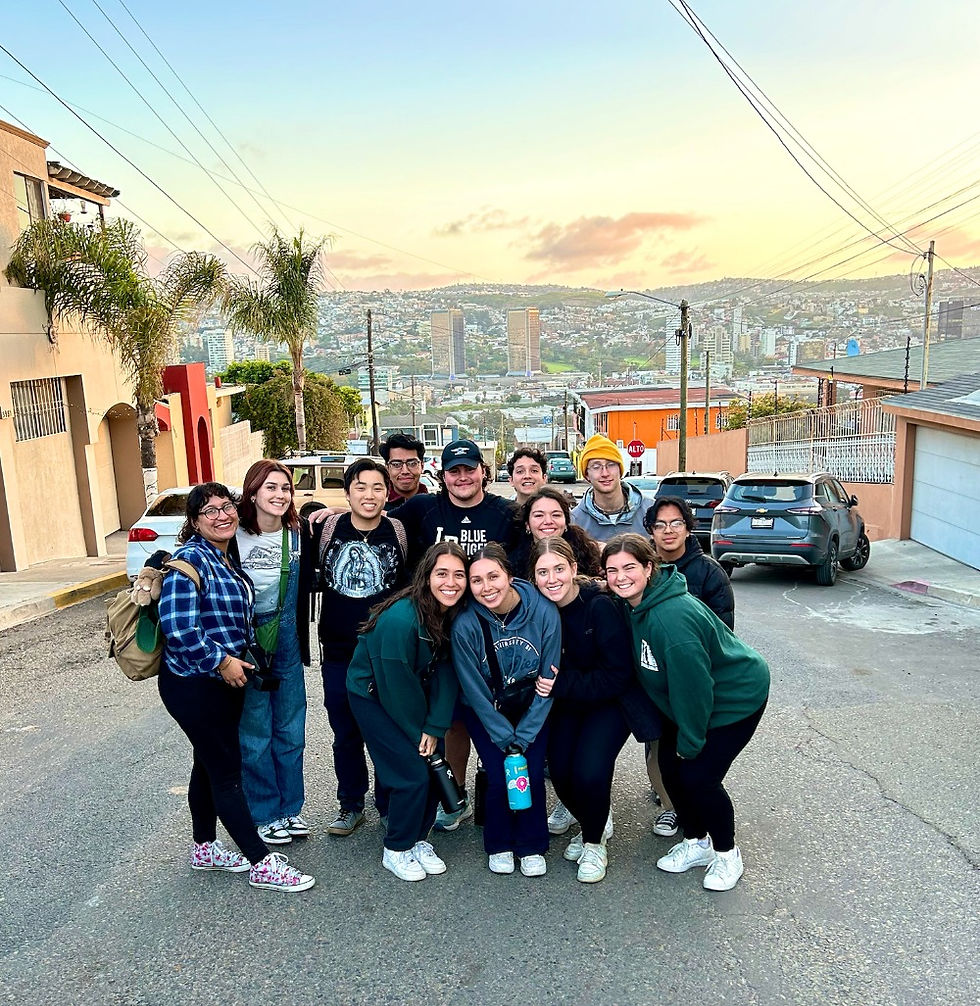
Before going to bed, I encountered my first street dog who just looked at me. You know how dogs do that sometimes? It's like they're looking into your soul. This dog was all matted, and it seemed as though part of his ear had been bitten off, but this was the most gentle dog I have ever met. Later on, I was reminded that you are not supposed to pet these dogs (sorry!), but I couldn't help it. This dog had clearly gone through something so traumatizing and was just looking for some love. My pals on the trip began calling my new friend calle, meaning "street," and I couldn't help but smile at what a perfect metaphor this was. Tijuana is portrayed in the media as a place plagued by crime, cartel violence, and disease. Nearly every student at USD has been warned not to cross the border, and if you must, make sure you just go right into the airport. But as soon as we arrived at this parish, I found myself overwhelmed by the amount of love I felt. These beautiful people didn't know us at all and were still making time to thoughtfully prepare for our arrival. Many of these children have gone through horrors I cannot even begin to imagine, and still they show up for a game of basketball or "footbase" (which I later learned was just another way they were trying to explain kickball to us Americans). These horrors they have faced does not make them any less deserving of love. On the contrary, these people inspire me with their strength, they have seen so much evil and still choose to love anyway. I have learned that so many people find it easier to fear than to love. Just like with calle, it is so much easier to dismiss the things we are afraid of than to get vulnerable and love them.
And boy oh boy, was I about to get vulnerable. We visited orphanages and migrant shelters, and even when I thought my heart could not take it anymore, we heard their stories anyway. I met one man at Casa del Migrantes who expressed his frustrations to us. He wanted to enter America legally, but he would still have to wait eight more months to speak with a representative. He has a sister who is ready to receive him in America, and he calls her everyday. All he wants is to go home to her. I met a little girl named Paula at the orphanage. This particular orphanage offers sanctuary to children who have been sexually abused. Someone of these children are so traumatized that they weep silently when any adult tries to talk to them. These are the very same children who jumped rope with us and traced us with pastel chalk. These are the same children who scarfed down our gourmet lunch: Little Cesar's pizza. Paula and I threw the football to one another, and I learned that she can speak English. This was pretty rare for a young girl in Tijuana, so I asked her how it was that she spoke English so well, and she told me she was originally from the United States. This little girl was deported and she is six years old. I met a man at Las Memorias, a hostel with the goal of assisting and attending to adults and minors living with HIV/AIDS and addictions, as well as their family members. This man was a reformed drug dealer still undergoing HIV treatment, and this is the very same man who approached my friends and I with four newborn kittens. He has been caring for them since he found their mother missing a leg out on the street. These little guys fit right into the palm of my hands, and I was amazed at how this man who once worked in the underbelly of one of the crime capitals of the world could display such selflessness and gentle care for these tiny creatures. These beautiful people stripped me of my stereotypical thinking and deeply rooted biases. They turned my worldview upside down only to turn it right side up again with their immense kindness and compassion. Even though I had difficultly overcoming the language barrier, I found that it did not matter as much as I thought it would. Sometimes, people just need to be heard.

In a similar way, sometimes people just need to be seen. We took a trip to Playas, the beaches of Tijuana which are closest to the border wall. When we spoke with the border patrol agents, they told us that reinforced wall was being built. When we expressed our confusion, they told us that new sections with corrosion coating were being put up so that the ocean air would not erode the existing border. What they failed to mention is that all of the murals which have been painted on these walls over the past decades by local artists have been destroyed. These beautiful paintings have been replaced by this sterile, gray corrosion coating. In addition, there used to be a door to a place called "Friendship Park." This space was intended for families who have been separated by deportation to be able to open the door, cross the border for a couple hours at a time, and play in the park with one another. Sometimes, they would host masses and other religious celebrations in this park on special occasions as well. With this new wall, that door is bolted shut, and friendship park no longer exists. Of course, I understand the need for national security, and I am grateful to live safely in America, but these developments just seem brutal. It seems as though we are considering these people to be less than human, and we are destroying their attempts to make something so brutal into something beautiful. It just feels so heartbreaking and heavy. But if I have learned anything about people, it is that they are so resilient. Sure enough, these locals have started on new murals. I hope that when I come back again, there will be more and more each time.

A few days into the trip, I was beginning to find my footing when the parish announced a movie night. I was intrigued to find that they had rented out the local cinema so everyone could come and watch The Passion. For those of you who are unfamiliar, the passion of Christ is the story of how Jesus is condemned to death, forced to carry the cross for His own crucifixion, is nailed to this cross, dies on this cross, is buried in the tomb, and ultimately rises again from the dead. We arrive at this movie theater to find it full. Families, kids, teens, elderly people, everyone is here! Father Jesse gets up in front of the crowd and starts teaching us all a dance, and we all sing along to the beautiful song "Lord I Need You" which this parish has learned to sing in English especially for us. We are all laughing, dancing, and singing along before sitting down for the movie. I have seen The Passion before, but I had forgotten just how brutal and gory it is. The most tragic part for me, however, is not the crucifixion itself, but a scene with Mary and Jesus. After being whipped nearly to death, Jesus is forced to carry this cross made of wood that is even larger than He is. In doing so, He falls a number of times and is forced to get back up by a hateful crowd hurling insults at Him the entire time. Mary walks along on this journey with Him, and after He falls, she rushes to meet Him. Then, the movie shows a flashback of Jesus falling as a child, and Mary rushes to meet Him even then to make sure He is alright. She cradles His head, and in these parallel scenes, she uses the same words of comfort: "I'm here." And just like that, all of the tears I had been fighting the whole week came pouring out (yes, I went through seven tissues). But there it was, a message to me from God Himself. I cannot save these beautiful people any more than Mary can save Jesus from His fate. There are things in life that will always be beyond our control. As an eldest daughter, an aspiring therapist, and a fixer by nature, this was a tough pill to swallow. I cannot undue decades of violence and poverty, but I can remind these people that through it all, I am here. In fact, I wasn't ever really in Tijuana to fix anything at all, I was simply there to walk alongside these remarkable people and meet them exactly where they are.
My newfound conviction was put to the test on our last day of delivering care kits to the community. These bags were filled with cooking oil, cans of vegetables, uncooked pasta, and blankets. We took nearly 50 of these bags up the hills and out into the neighborhoods. We were met by locals whose homes were nothing more than glorified sheds made of panels of wood with a tarp for a roof. The average working class citizen in Tijuana lives on $90 a week. For many of them, food and gas is simply more important. We spoke with families and children before giving them their bags. The woman I gave the bag I was carrying to initially rejected it, telling us that there were others who needed it more. When we insisted we had plenty to deliver, she broke down weeping. This woman could not have been more than 4'10," but when I handed her the bag, she pulled me into the strongest hug of my life. An ongoing trend that I noticed is that because they have nothing, they appreciate everything.

After an afternoon of tears, we all got ready for our last night at the parish. We went to the Holy Thursday vigil mass, and I have never seen a church more packed in my life. It was obvious this was a lively parish from the moment we arrived, but I never expected the crowd to extend into the crying room, out the door, and down the stairs. Following the amazing mass celebration, these people went into the parish center for adoration. At this point, it is roughly 10:00 PM. I decided to go in to listen to the music, and I discovered the very same people we gave the care kits too were the ones weeping in gratitude, on their knees, hugging one another. When I asked a parishioner how long everyone would be in there, she smiled and told me that some of the people would sleep in there, but she would be sure they were gone by the time they made breakfast for us in the morning. These people have nothing. No true house, not enough food, and no proper roof, but they still find it in themselves to have more gratitude than most of the people who live with me in San Diego. They amaze me. They seem to understand some fundamental piece about love that we are missing here in America. After an hour of mattress surfing (yes, like in The Princess Diaries 2), the men's group invited us to join them around the fire. We played categories and hot potato of all things, but I have not laughed that hard in a very long time. Everyone was telling stories and dancing, and their joy was so infectious. No one was in any hurry to leave, and it seemed as though all they wanted to do was spend more time with one another. We didn't make it to bed until well after midnight, and it dawned on me that I didn't want to leave.
In the airport after my trip on my way home for Easter, I stumbled upon a new book in the airport by Savannah Guthrie, the main co-anchor of the NBC News Morning Show Today, called "Mostly What God Does." It is a collection of short essays she has written over the years with one main message in mind: mostly what God does is love you. This was a pretty big concept for me after a week of immersing myself in the realities of Tijuana, but something in my heart told me to pick it up anyway. 48 hours later, I've finished the book, and I'll talk about it with anyone who will listen. There were so many wonderful pieces of wisdom, but there was one specific part that really struck me: the vocation of sharing. I often joke with my friends that my vocation is to talk. I've been known to be late to many meetings because I will get caught up chatting with those I love, and sometimes I think that therapy may be the closest thing I get to a career in talking. But this notion was such a beautiful spin on my silliness. How beautiful it is to share. I think when we have experiences like this, it is our duty to share them with the world, to pass on what we have learned. I cannot thank you all enough for letting me share my little glimpses of Gracie with you. I screenshot every kind text anyone sends me about my blog, and I write down every compliment in my Notes app. Your support means the world to me. Talking doesn't mean anything if I don't have anyone to share it with.

One of the priests for my parish, Fr. Greg, said something so beautiful once: we are Hallelujah people. Hallelujah is one of the key pillars of the Catholic faith meaning "praise the Lord" and during the Easter season "He is risen." Before going to Tijuana, I didn't really understand what he meant by that. But now, I have encountered more Hallelujah people than I can count. These remarkable human beings are light in the darkness, life amidst death, love in a world that can be so overwhelmed by hate. My week in Tijuana is an experience I joyfully and gratefully refer to as a crash course in life and in love. I came to this new place with fear and uncertainty and returned to USD with more love in my heart than I know what to do with. I will be thinking about this trip for the rest of my life, and if you ever have the chance to do something like this, you must go. He is risen! Hallelujah! Hallelujah!
I love you.
If you want to support any of these amazing organizations, I have linked more information below:
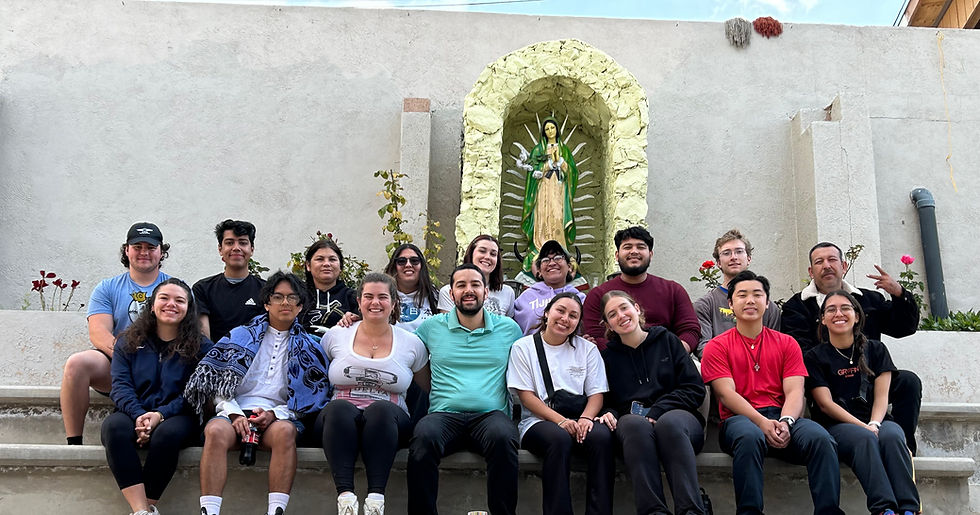
Thank you for coming on this journey with me! I hope you have enjoyed your glimpse of Gracie! :)


_edited.jpg)
This was AMAZING to read!!! It gave my goose bumps and brought me right back to TJ with you. You captured our trip so beautifully with your words. Thank you so much for sharing Gracie!🤍🤍
Beautifully written. I love how you love, Gracie!